Box grades explained.
Grade A, B, C or New — condition is the other half of speccing a box. Here is exactly what graders check, which grade fits which job, and how condition trades against cost.
Which grade fits your load?
Tell us how critical the load is and how many cycles it needs to survive — we'll recommend the grade that fits and quote it.
- ♻ Landfill-free
- 48-hr quotes
- Nationwide freight
Box grades describe condition, not size. Grade A is like-new with clean liners and square corners; Grade B has one to two prior uses and minor cosmetic wear; Grade C is economy stock for light or single-cycle use; and New is first-run board with certified ratings. Match the grade to how critical your load is — and pay only for the condition you actually need.
Grade chart
| Grade | Label | Detail | Best use |
|---|---|---|---|
| A | Like-new | Clean liners, square corners, no significant crush. | Customer-facing shipping, demanding reuse |
| B | 1–2 prior uses | Minor cosmetic wear, sound structure. | Internal handling, storage, most bulk |
| C | Economy | Visible wear, best for light or single-cycle use. | Non-critical loads, reconditioning feedstock |
| New | First-run | Certified ECT/burst ratings available. | Food-grade, export, spec-critical loads |
How grading works
A grade is a condition rating, and it comes from four signals a grader checks on every box. The liner — the flat facing inside and out — is inspected for tears, delamination and print damage. The corners and edges are checked for squareness, because a box that has lost its geometry has lost much of its stacking strength. The board is examined for crush and dents, which flatten the flutes that carry the load. And moisture history matters, because water permanently weakens fiber even after the board dries.
Those four signals sort each box into A, B, C or New. Consistency is the whole point: a supplier who grades the same way every time lets you order used stock with confidence, which is what separates a real used-box operation from a scrapyard.
When to use each grade
Grade A — like-new — is for customer-facing shipping and demanding reuse where appearance and full strength matter but you still want used pricing. Grade B is the everyday workhorse: sound structure with minor cosmetic wear, ideal for internal handling, storage and the bulk of bulk loads. Grade C is economy stock for light-duty, single-cycle or non-critical work, and it also feeds our reconditioning and upcycling lines. New is for the loads that legally or contractually require certified ECT and burst ratings, food-contact liners or export compliance.
Cost tradeoffs
Condition is the main lever on price. Grade A costs more than B, and B more than C, while New sits well above all of them. The trap is over-buying: paying for Grade A or New when the load never needed that condition is money left on the table. The opposite trap — under-buying — shows up as failed boxes and damaged product, which costs far more than the grade you saved on.
The right move is to match the grade to the job. For most internal storage and non-critical shipping, Grade B used stock delivers the strength you need at a fraction of new-box cost, and Grade C stretches the budget further for light-duty work.
Want the same grades broken down as a buyer's guide? Read: Box grades explained →
The four grading signals in detail
Whether you are checking a load we sent or grading your own surplus before selling it, these are the four things a grader reads on every box — in order.
- Liner integrity. Look at the flat inside and outside facings for tears, delamination (liner lifting off the flutes), scuffs and heavy print bleed. The liner carries tension; a torn liner is a weak box.
- Corners & edges. Set the box square and check that corners are crisp and vertical. Rounded, soft or blown-out corners mean lost geometry — and geometry is most of a box's stacking strength.
- Crush & dents. Press the walls. Flattened flutes don't spring back and no longer resist compression. Surface scuffs are cosmetic; a crushed panel is structural.
- Moisture history. Watch for tide lines, staining, warping, soft spots or a musty smell. Water permanently weakens fiber even after the board dries, so a once-wet box grades down regardless of how it looks today.
Quick inspection checklist
Run this on a sample from any used load before you put it into service:
- Liners intact, no delamination
- Corners square & firm
- No flattened flutes or panel crush
- No tide lines, stains or warp
- Dry, no musty smell
- Flaps & scores still sound
- Consistent with the grade ordered
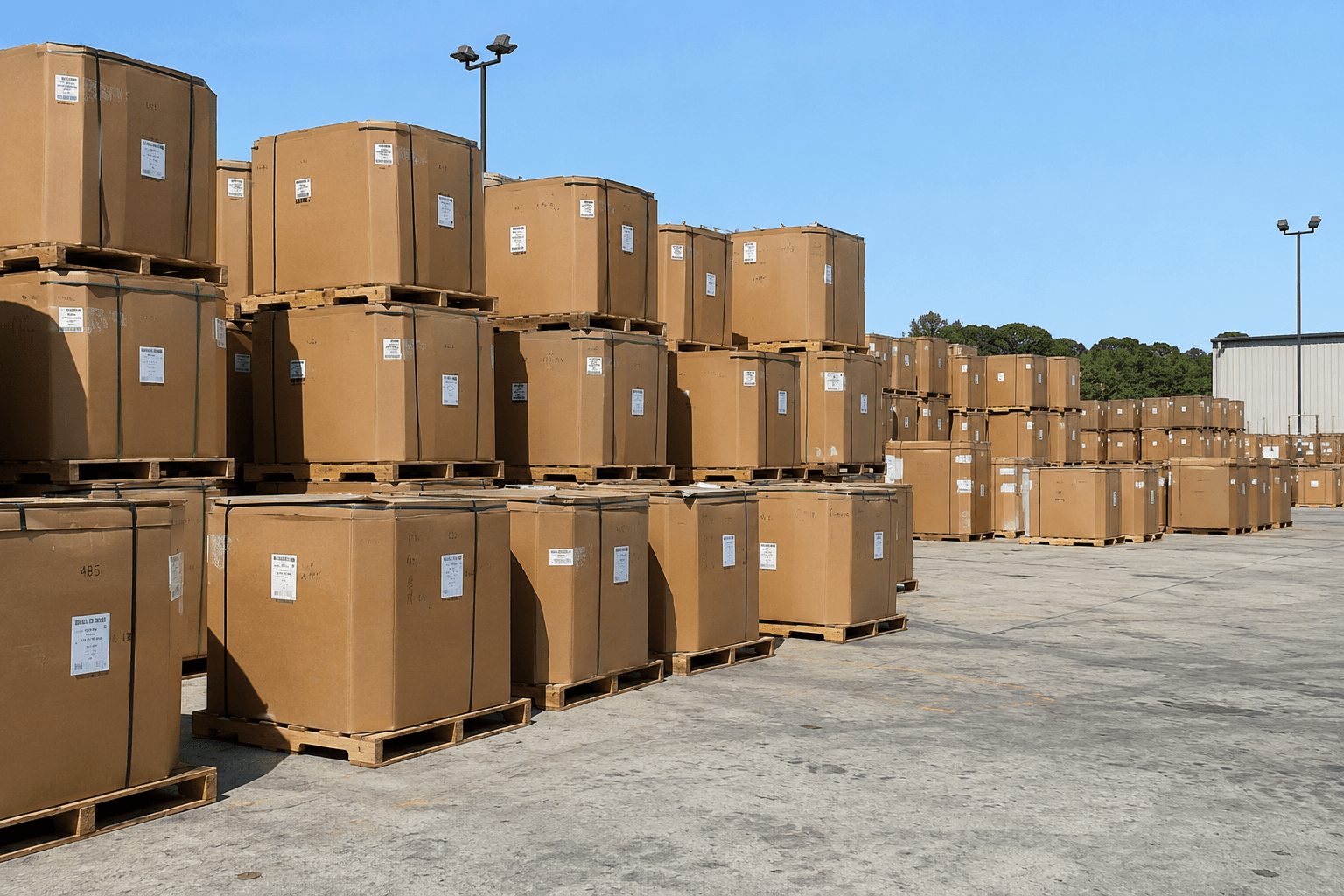 Sorted by gradeIncoming stock is triaged and sorted by grade before it is offered — so you buy known condition, not a gamble.
Grade is only half the spec
Condition tells you how sound a box is; it doesn't tell you how much it can carry or how it fits your pallet. Pair a grade with the right wall type and footprint and you have a fully specified box — condition, strength and size all matched to the job.
Not sure how to combine them? Send us the load and how critical it is, and we'll recommend a grade, a wall and a size together — then quote it, freight included.
Our used Gaylords are sorted and sold by grade, so you always know what you are getting.
Frequently asked questions
What does Grade A mean for a used box?
Grade A is like-new: clean liners, square corners and no significant crush. It performs indistinguishably from new for most uses and suits customer-facing shipping and demanding reuse where used stock is acceptable.
Is a Grade B Gaylord strong enough for storage?
Yes. Grade B has one to two prior uses and minor cosmetic wear but sound structure. It is the workhorse grade for internal handling, storage and most bulk loads, at a lower price than Grade A.
When should I choose Grade C?
Choose Grade C for light-duty, single-cycle or non-critical loads — or as feedstock for reconditioning and upcycling. It has visible wear, so it is best where appearance and maximum strength are not required.
How do you grade used boxes consistently?
Every box is inspected on four signals — liner integrity, corner and edge squareness, crush or dents, and moisture history — then sorted into A, B, C or New. Consistent grading is what lets you buy used stock predictably instead of taking a gamble.
Can a used box be re-graded higher after reconditioning?
Sometimes. Cleaning, cut-downs, re-flapping and re-lining can lift a Grade C box back into usable service, and a light touch-up can move a borderline B toward A. Reconditioning cannot undo crushed flutes or moisture damage, though — spent structure stays spent, and that fiber heads to upcycling or recycling.
Do grades affect weight capacity?
Indirectly, yes. Grade is a condition rating, not a strength rating — but crush, lost corner squareness and moisture history all reduce how much load a box safely carries. A Grade A double-wall performs close to new; a Grade C of the same construction should be derated and kept to lighter, single-cycle work.
What grade should I buy for shipping to customers?
Grade A used stock or New. Anything a customer sees should look clean and hold its shape, so Grade A (like-new used) is the value pick, and New is right when you need certified ratings, food-contact liners or export compliance. Reserve B and C for internal handling and storage.