Used Gaylord Boxes
Reconditioned bulk bins in Grades A–C, sold by the pallet, truckload or trailer.
Request used gaylord boxes
Tell us quantity, grade and destination — we'll send firm, freight-included pricing for used gaylord boxes.
- ♻ Landfill-free
- 48-hr quotes
- Nationwide freight
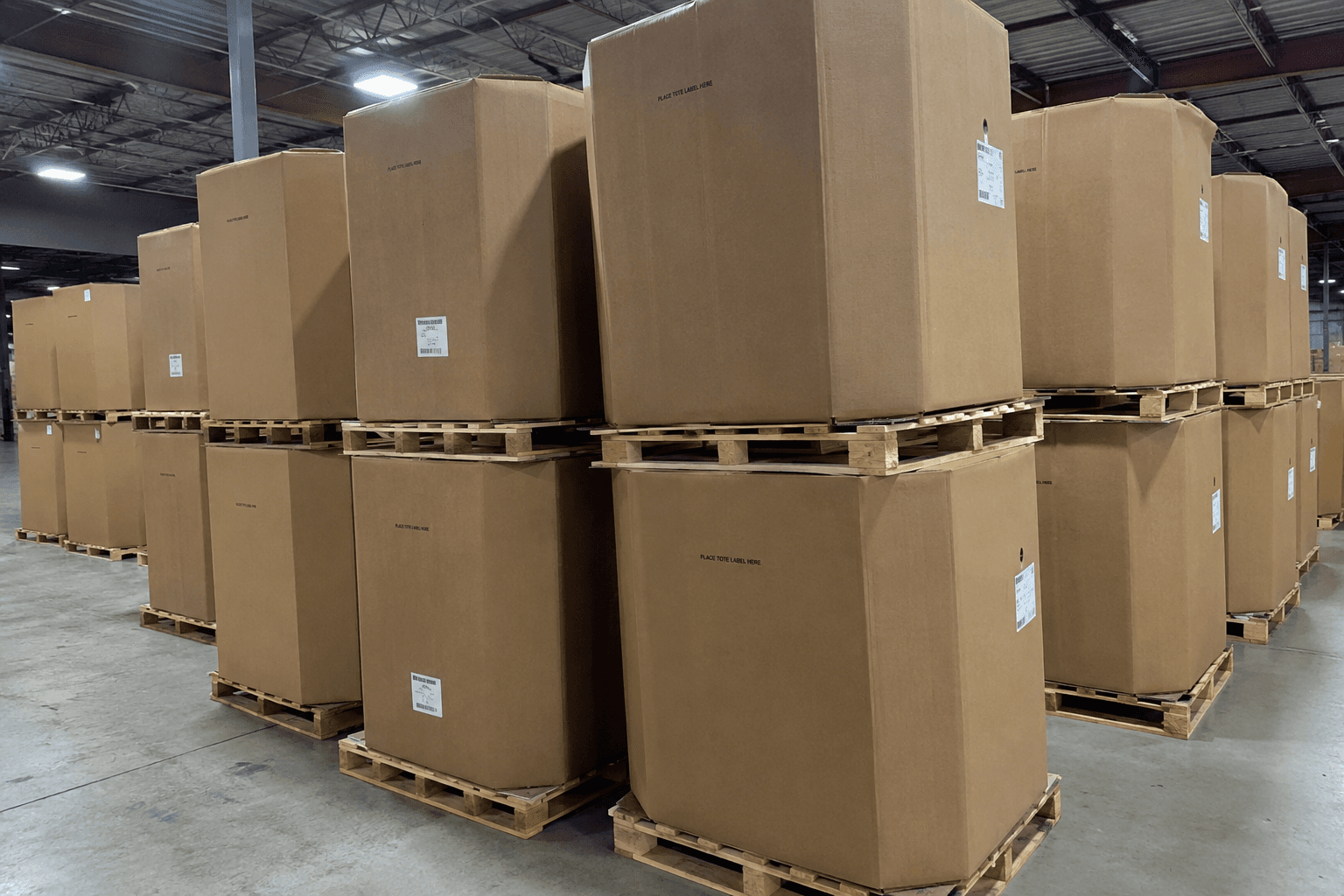 Bulk containersUsed Gaylord Boxes — inspected, graded and ready to ship.
Used Gaylord boxes are reclaimed bulk corrugated bins (typically 40×48 in.) that we inspect, sort by grade (A/B/C) and resell at 40–70% below new. We carry single-wall through 5-wall constructions and ship by the bundle, pallet or full truckload across the U.S.
Reconditioned bulk bins in Grades A–C, sold by the pallet, truckload or trailer. We inspect, sort and pack every load ourselves, so what arrives on your dock is exactly what we quoted — no surprise crush, no mystery moisture, no re-sorting on your floor.
Get freight-included pricing →Why buyers choose it
- Every box hand-inspected for crush, moisture and liner integrity
- Sorted, banded and stretch-wrapped on heat-treated pallets
- Mixed-grade "value loads" available for non-critical uses
- Optional custom cut-downs and re-flapping
Best for
- Manufacturing WIP
- Ag & produce
- Recyclers & scrap
- Bulk storage
- E-waste collection
Specifications
- Footprint40" × 48" (standard), custom on request
- WallSingle, double, triple, 4-wall, 5-wall
- GradesA (like-new), B (1–2 prior uses), C (economy)
- Min. order1 bundle (10–15 boxes)
- Load capacity300–2,000+ lb depending on wall
Industries that put used gaylord boxes to work
The same unit serves very different floors. Here is how each sector typically specs it — and what we ask about before we quote.
Move work-in-process between cells without stretch-wrapping every load. Double-wall handles most parts; go triple for castings.
Vented octagon bins for free-flowing produce and granules. We watch moisture history closely on anything food-adjacent.
High-volume, mixed-grade value loads where cosmetics do not matter — just capacity and price per unit.
Square, stackable footprints that palletize cleanly and hold a lid, so a warehouse racks them predictably.
Compact, sturdy bins for dense electronics; grade B is the sweet spot for cost and durability.
Match the load to the right build
Grades and wall constructions at a glance
Two tables that settle most spec questions. Grade covers condition and price; wall covers strength. Pick one from each and you have your unit.
Condition grades — used vs. new
| Grade | Condition | What it means | Best used for |
|---|---|---|---|
| A | Like-new | Clean liners, square corners, no significant crush. | Customer-facing shipping, demanding reuse |
| B | 1–2 prior uses | Minor cosmetic wear, sound structure. | Internal handling, storage, most bulk |
| C | Economy | Visible wear, best for light or single-cycle use. | Non-critical loads, reconditioning feedstock |
| New | First-run | Certified ECT/burst ratings available. | Food-grade, export, spec-critical loads |
Wall constructions and stacking strength
| Wall | Layers | Typical ECT | Best used for |
|---|---|---|---|
| Single-wall | 1 fluted layer | 32–44 ECT | Light bulk, half-height bins, dividers |
| Double-wall | 2 fluted layers | 48–61 ECT | Standard Gaylords, most bulk loads |
| Triple-wall | 3 fluted layers | 67–90 ECT | Heavy or dense goods, export |
| 4-wall | 4 fluted layers | 90–110 ECT | Very heavy loads, machinery |
| 5-wall | 5 fluted layers | 110+ ECT | Extreme duty, long-haul export |
Want the full dimensional reference? See the Gaylord size chart →
What we need from you
Send these five things and we turn around a firm, freight-included quote — usually within 48 hours. The more you can tell us, the tighter the price.
- Quantity & cadence — one-time count, or a monthly volume we should hold for you.
- Grade or budget — like-new A, workhorse B, economy C, or certified new. Not sure? Describe the job and we spec it.
- Size & wall — footprint, height and how heavy the load runs.
- Destination & dock — ZIP, and whether you have a forklift or need a liftgate.
- Any compliance needs — food-grade liner, export/ISPM-15, or certified strength ratings.
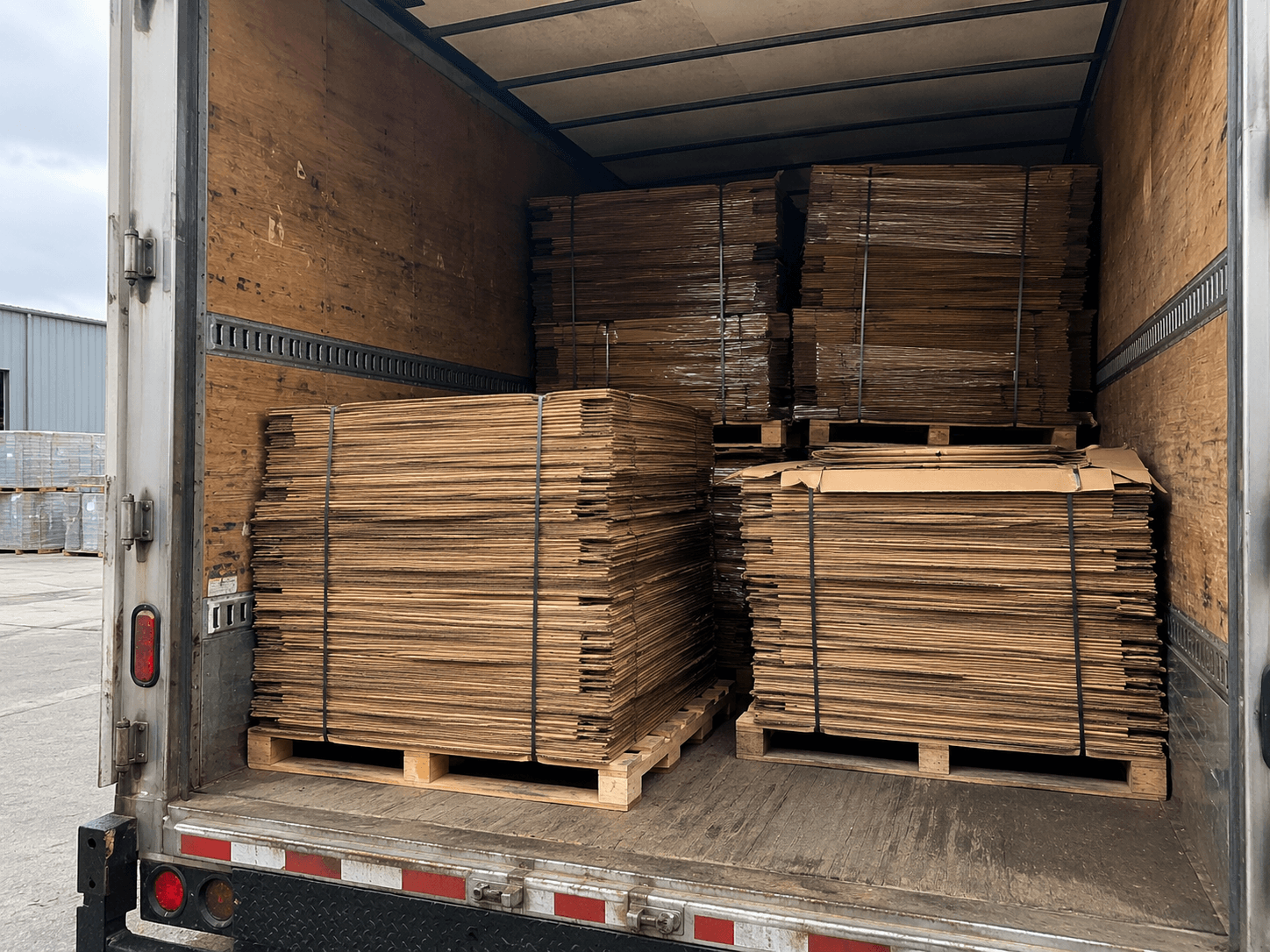 FreightEvery quote is landed — freight to your dock is already in the number.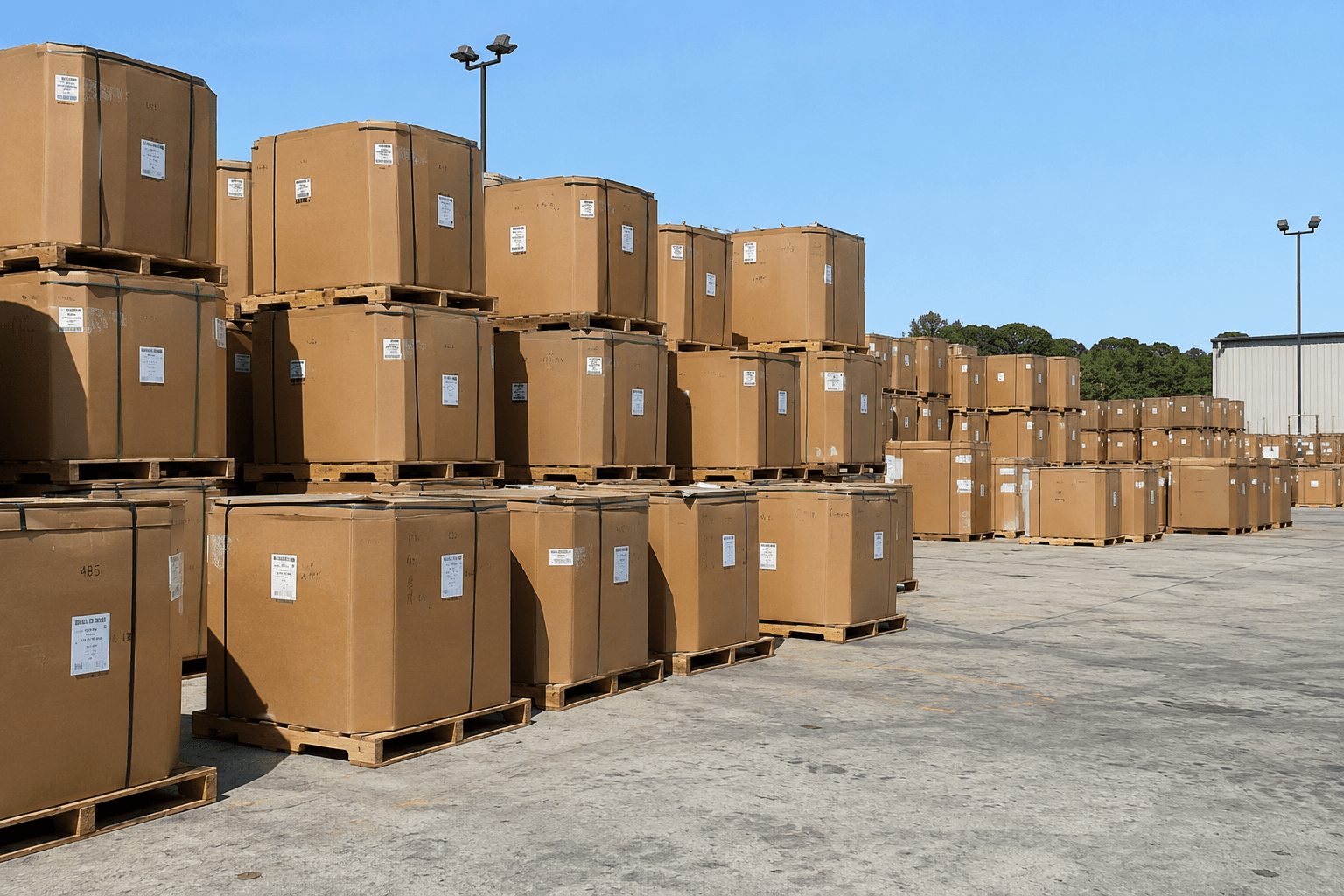
Every unit keeps fiber in the loop
Choosing reclaimed used gaylord boxes over first-run board avoids the water, energy and virgin pulp that a new box demands, and extends the working life of fiber that already exists. When a unit finally wears out, it does not go to landfill — it becomes dunnage, divider stock, or clean recycling feedstock. That is the whole point of the reuse-first ladder.
See our impact model →Shipped nationwide, priced landed
We move stock by LTL for pallet orders and full-truckload for bulk, and we lean on backhaul lanes to cut both cost and carbon. Pricing is always freight-included, so there is no post-quote surprise. Tell us your dock situation — forklift or liftgate — and we plan the delivery around it.
How we handle transport →Used Gaylord Boxes — frequently asked
Frequently asked questions
How much do used Gaylord boxes cost?
Most used Gaylords run $4–$14 each depending on grade, wall count and volume. Full truckloads carry the lowest per-unit price. Request a quote with your quantity for exact pricing.
What is the difference between Grade A, B and C?
Grade A boxes look and perform like new with clean liners and square corners. Grade B has had one to two prior uses with minor cosmetic wear. Grade C is economy stock for light or single-cycle applications.
How much weight can a used Gaylord box hold?
Capacity runs from about 300 lb on single-wall up to 2,000 lb or more on 4- and 5-wall builds. Wall count drives the number far more than grade does — grade mostly affects how many more trips the box has left. Tell us the load weight and how high you stack and we spec the wall for you.
Can you cut Gaylords down to a shorter height?
Yes. Cut-downs and re-flapping are standard reconditioning work here, so a 48-inch bin can become a 36- or 30-inch bin sized to your product or your rack opening. Custom footprints outside the standard 40×48 are available on request as well.
How is used gaylord boxes priced and sold?
Pricing scales with grade, wall construction, size and volume. We sell by the bundle, pallet or full truckload, and full loads always carry the lowest per-unit price because freight is spread across more units. Every quote is landed — the number you see includes freight to your dock.
What is your minimum order and lead time?
Most stock ships from a single bundle (roughly 10–15 boxes), though pallet and truckload volumes give the best economics. In-stock items typically dispatch within a few business days; recurring or spec-critical lots are scheduled to your pack line so you are never caught short.
Can I get a sample or photos before I commit?
Yes. For larger orders we send photos of the exact lot — or a small sample bundle — so you can confirm liner, corners and fit before the truck rolls. We would rather spend a day getting the spec right than ship a load that does not work for you.
How do you keep this landfill-free?
Every unit runs the reuse-first ladder: resell, then recondition, then upcycle into dunnage or divider stock, and only then recycle the spent fiber into new board. Landfill is never a destination for material we handle.
Keep exploring
New Gaylord Boxes
First-run bulk bins when spec-critical loads demand certified, virgin-lined board.
ShippingCorrugated Shipping Boxes
Reclaimed and overstock shipping cartons in hundreds of sizes, by the bale or pallet.
AccessoriesPallets & Box Accessories
Pallets, lids, gaylord liners, boxboard sheets, corner boards, banding and more.
Or browse the full product catalog, what we do, or the blog for packaging guides.